
Funding for dual-use technologies
Is your company developing dual-use technology and looking for funding for the next stage? We look at DeepTech Goes Dual, the SMART Path, STEP, the EIC Accelerator and STEP Scale Up.
Is your company developing dual-use technology and looking for funding for the next stage? We look at DeepTech Goes Dual, the SMART Path, STEP, the EIC Accelerator and STEP Scale Up.
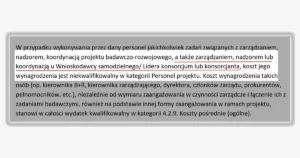
Under FENG, NCBR treats the remuneration of persons performing management functions as an indirect cost. We explain the implications for new and ongoing projects.

How can a business participate in contracts financed under SAFE? We explain the roles of contractors and subcontractors, supply-chain requirements and the conditions for participation.

A decision requiring a company to repay funding does not in itself mean that a management board member is personally liable for that amount. Such liability may arise only in separate proceedings and only if the conditions laid down in the Public Finance Act and the Tax Ordinance Act are met.
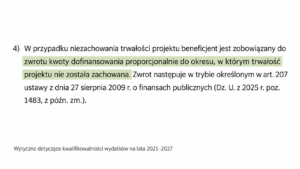
During the project sustainability period, the funding recipient remains bound by obligations arising from the funding agreement. A breach of those obligations may result in repayment of funding.
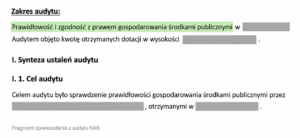
A finding of irregularities in an audit conducted by Poland’s National Revenue Administration (Krajowa Administracja Skarbowa, KAS) does not in itself mean that funding must be repaid or that criminal liability has been established. It is important to distinguish between audit findings, their significance in the audit report, and the further course of the case. The funding recipient’s actions during the audit may also affect what happens next.